Kampukuta
$5,600.00
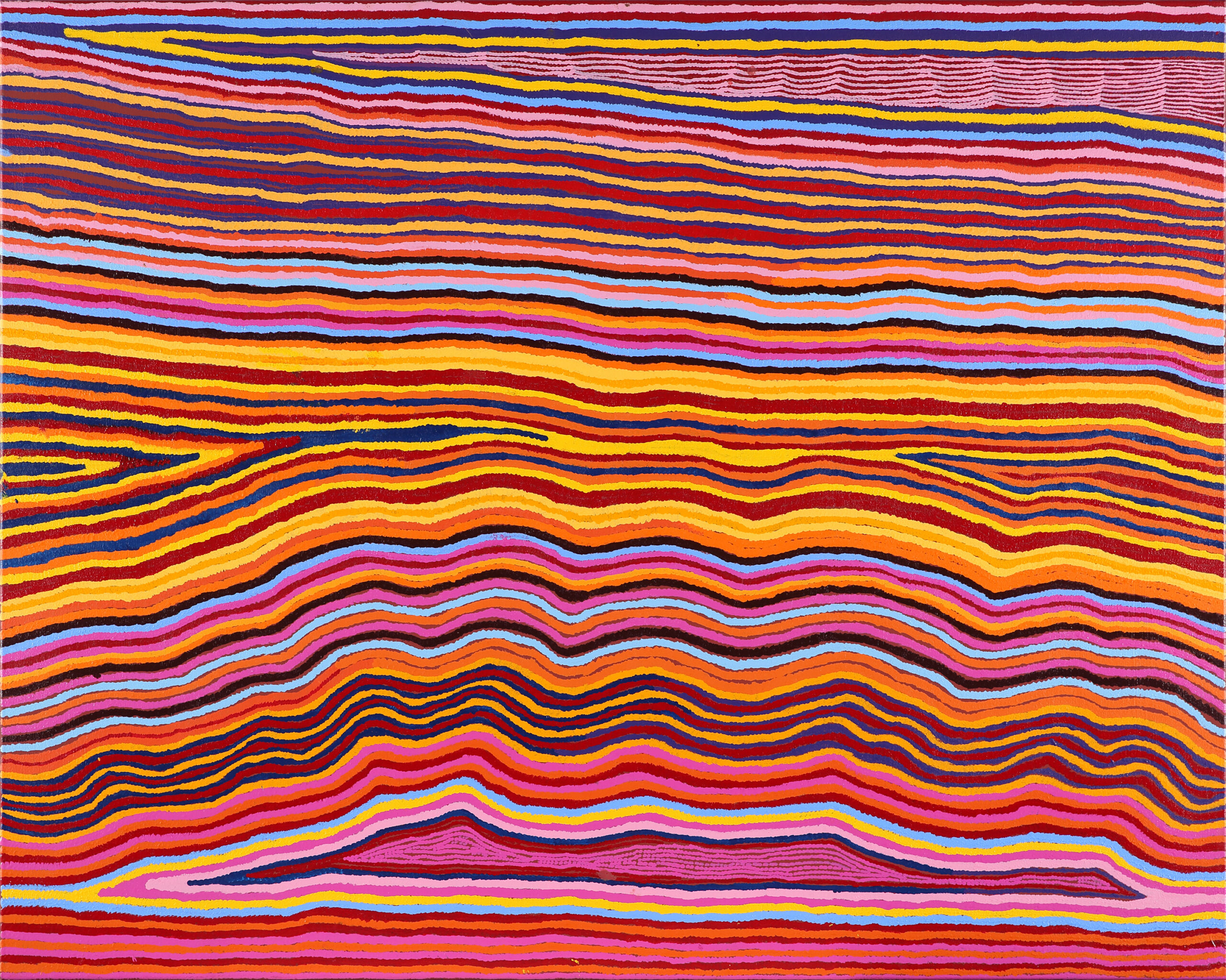
Ngayuku canvas-pangkaṉa palyaṉu, minyma palu, minymatjaranya waṉaṟinangi wati nganalu Nyirulu. Nyirulu waṉaṟinangi. Kaya pitjalinangi. Munu waṉaṟa waṉaṟa waṉaṟa waṉaṟa minyma palunya Kampukutanya tarka rungkaṉu – katantanu. Kaya kanyini. Kanyiṟa kanyiṟaya nganala panya Kuṟu Aḻalaya puḻpangkaya kanyiningi. Kanyiṟa kanyiṟa wati-pakaṉu. Waṉaṟa waṉaṟa waṉaṟa pungu. Kaya nyangangi minyma nyakulaya kumpiningi minyma paluṟu tjana nyarangku. Minyma nyangatja. Walka nyangatjaṉa palyaṉu. Palu. Minyma nyanga tjuṯangkuya nyakulaya kumpiningi. Minyma seven-paya pitjalinangi. Minyma seven. Ka wati kutjungku tjananya waṉaningi Nyirulu. Waṉaṟa … paluṟu nguḻutjinganingi, kaya pakaningi nyakula, nguḻu. Nyakulaya pakaningi munuya ma-nyinakatiningi, ngura kutjupangka. Ngura kutjupangkaya ma-nyinakatiningi. Ka tjananya nyinara nyara nyangangi palu palunya wanaṉu. Nyangatja wati paluṟu wirkanu. Nguḻutjinganuya panya waṉaṟiningi. Wati nganalu, Nyirulu palunya. Waṉaṟa waṉaṟa waṉaṟa waṉaṟa Kuṟu Aḻalaya nyinara nyinara nyinara wati-pakaṉu. Minyma panya palunyaya kanyiningi number one-nga panya. Kanyiṟa kanyiṟaya tjaḻpa rungkantja – katantankunytja pungu. Rungka. Kaya kanyiṟa kanyiṟa panya pakaḻtjingiṟa wantikatingu. Ngananya. Wati-pitjantja wati-pitjantjaya … nyara tiṯutja wati-pitjalaya anu. Ngura nyara wiluṟaraya anu. Ka tjananyaya waṉaṟa waṉaṟa tjinguṟu waṉaṟa waṉaṟa waṉaṟa waṉaṟa ngura nyara alinytjaraltaya anu kayili tjinguṟu – uwa kayili – pitjaliṟaya pitjaliṟaya waṉaṟa waṉaṟa waṉaṟa.
Ngaḻṯutjara, minyma nyangatja, minyma nyanganpaya pitjalinangi ngaḻṯutjara nyanga walka nyanga ngayuluṉa palyanuṉa ngayuku kapaliku ngunytjuku tjamuku ngura ngaḻṯutjara walka nyangatjanya ngaḻṯutjara ngalya-ngaṟanyi kawan-kawanpa. Nyara ngaṟanyi ka kuwari nyanga Tjukurpa palunyana wangkanyi ngaḻṯutjara. Ngayuku kapali tjuṯaya pitjalinangi. Minyma seven. Ka watilta wati kutjulta tjinguṟu eight-pa. Para-waṉaningi wati nyara kutjungku. Ngaḻṯutjara waṉaṟa waṉaṟa nyarangka tjarpangu tjinguṟu nyarakutu tjarpangu pupanyilta wati paluṟu nyinantja. Tjukurpa! Uwa.
On my canvas I have painted those women who were perpetually followed by the man known as Nyiru. It was Nyiru who was always following them. And the women were on the run. So along here, he chased and chased and chased and broke the bones of one of the women: Kampukuta. And so the others looked after her, caring, caring at that place Kuṟu Aḻa, there in the white rock cave. They looked after her there and then set off again. He had followed and followed and followed and hit her. The women watched from their hiding places, those women there. This woman – I’ve painted her using this symbol here. Her. All the women were keeping watch as they hid. The seven women who travelled. Seven sisters. But they were followed by only one man, Nyiru. He followed them, frightening them and they would leap up terrified when they saw him. They’d run away scared and then settle down again, off in another place. They would set up camp again somewhere else. They’d be stopping somewhere but then again he would find them. The man would make another appearance. They were terrified by his constant pursuit. Who was the man in question? Well, it was Nyiru of course. Following, following, following, they camped at the site Kuṟu Aḻa – camping, camping, camping, and then headed off again. The women were looking after the oldest sister. Caring for her because her shins had been broken. So they had to always on the move. They went to country to the west. They were followed and followed and followed. They were endlessly pursued, travelling to a place in the north. Yes – it was in the direction north. They journeyed and journeyed, pursued the whole time.
These women here, these dear ones – I’ve painted them here, I’ve created this painting of my grandmother’s, mother’s and grandfather’s country, the dear things, I’ve painted these designs here of those who have been lost. Here they are here in the image, and it is their Tjukurpa that I’ve been voicing now, the dear things. All my grandmothers travelling through. Seven women. Plus the man – so altogether there are eight. That man followed them everywhere. Those poor things were chased all over and that is where the man crouched. This is the Tjukurpa! Yes.
Transcribed and translated by Beth Sometimes